
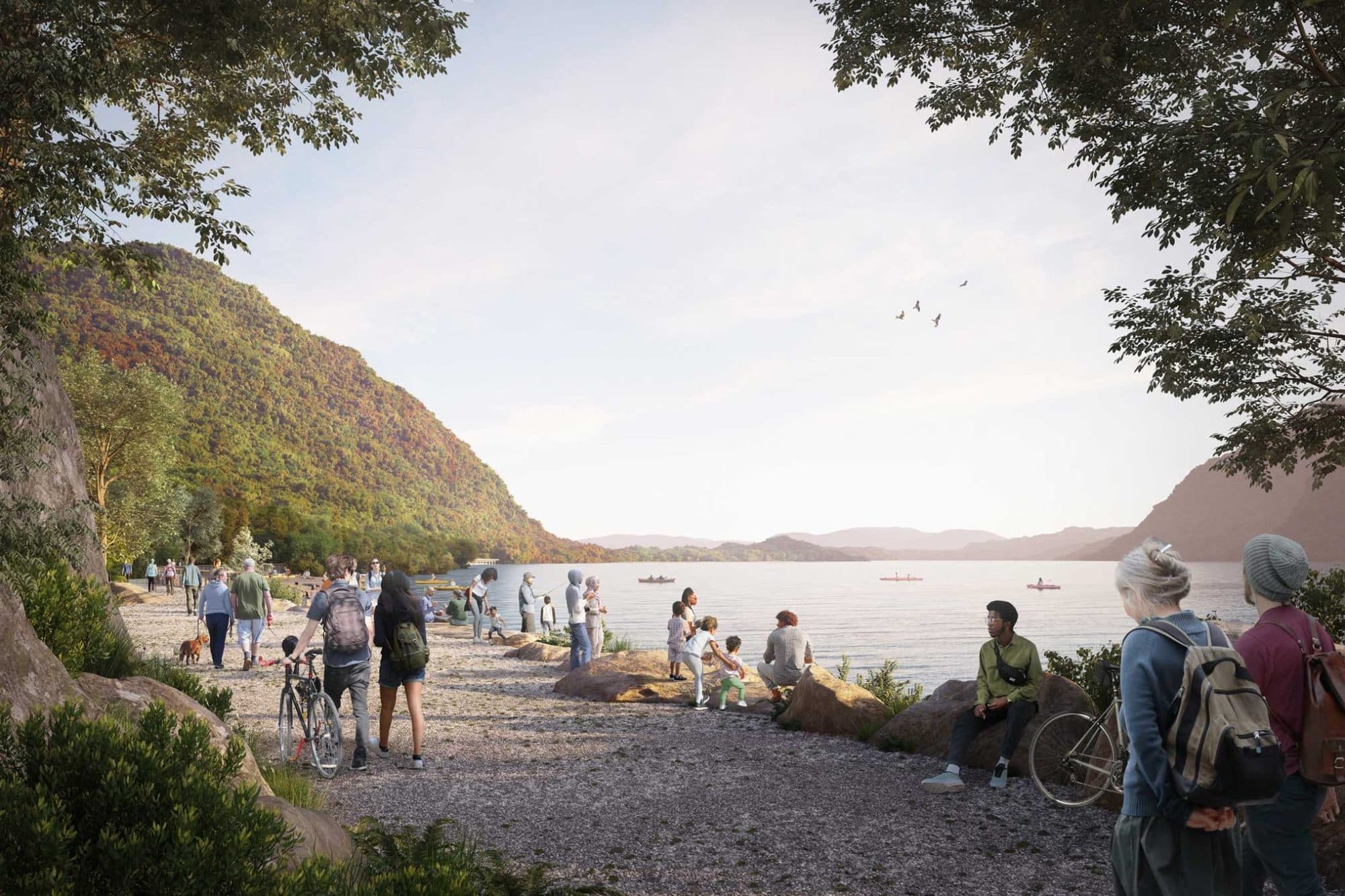
Living Landscape
Restoring the Shoreline
Building a trail along the Hudson means repairing what a century of industrial use left behind - not just adding a path on top of it.
Much of the Fjord Trail corridor was shaped by more than a century of rail, quarrying and industrial use along the Hudson's edge. Before any trail surface goes in, project teams work section by section to stabilize eroding shoreline, remove invasive plant species, and reintroduce native vegetation suited to the tidal zone.
That work isn't cosmetic. Native shoreline plantings slow erosion, filter stormwater before it reaches the river, and rebuild habitat for fish and birds that depend on the tidal edge. It's slower and less visible than building a walkway, but it's what makes the walkway sustainable in the first place.
The result, over time, is a shoreline that's healthier than it was before construction began - not just a trail placed alongside it.